
Insights from experience
Practical guidance on post-sale strategy, retention, and operational excellence, from operators who've sat in your seat
Most Read Articles
THE SAGE EXECUTIVE ANSWERS TO THE BIG QUESTIONS
How can we scale Customer Success without adding headcount at the same rate?
1
Scaling Customer Success starts by changing how the work gets done. Sage CS Advisory combines segmentation, digital engagement, AI, automation and clear human intervention points to expand coverage while protecting the moments where people create the most value.
Why are we still surprised by customer churn?
2
Unexpected churn is often a signal-to-action problem. Sage CS Advisory connects signals across product usage, support, engagement and customer feedback to context, ownership and action so teams can identify and address risk earlier.
Why aren't our Customer Success tools improving retention?
3
Technology cannot fix an unclear operating model. Sage CS Advisory aligns customer journeys, ownership, data, processes and workflows so platforms like Salesforce, Gainsight and ChurnZero can support the outcomes they were intended to drive.
How should a PE-backed SaaS company evaluate Customer Success?
4
Evaluate Customer Success as part of the recurring-revenue operating system, not as a standalone function. Sage CS Advisory connects GRR, NRR, churn, expansion and cost-to-serve to the operational drivers behind them to identify where change can have the greatest impact.
Events
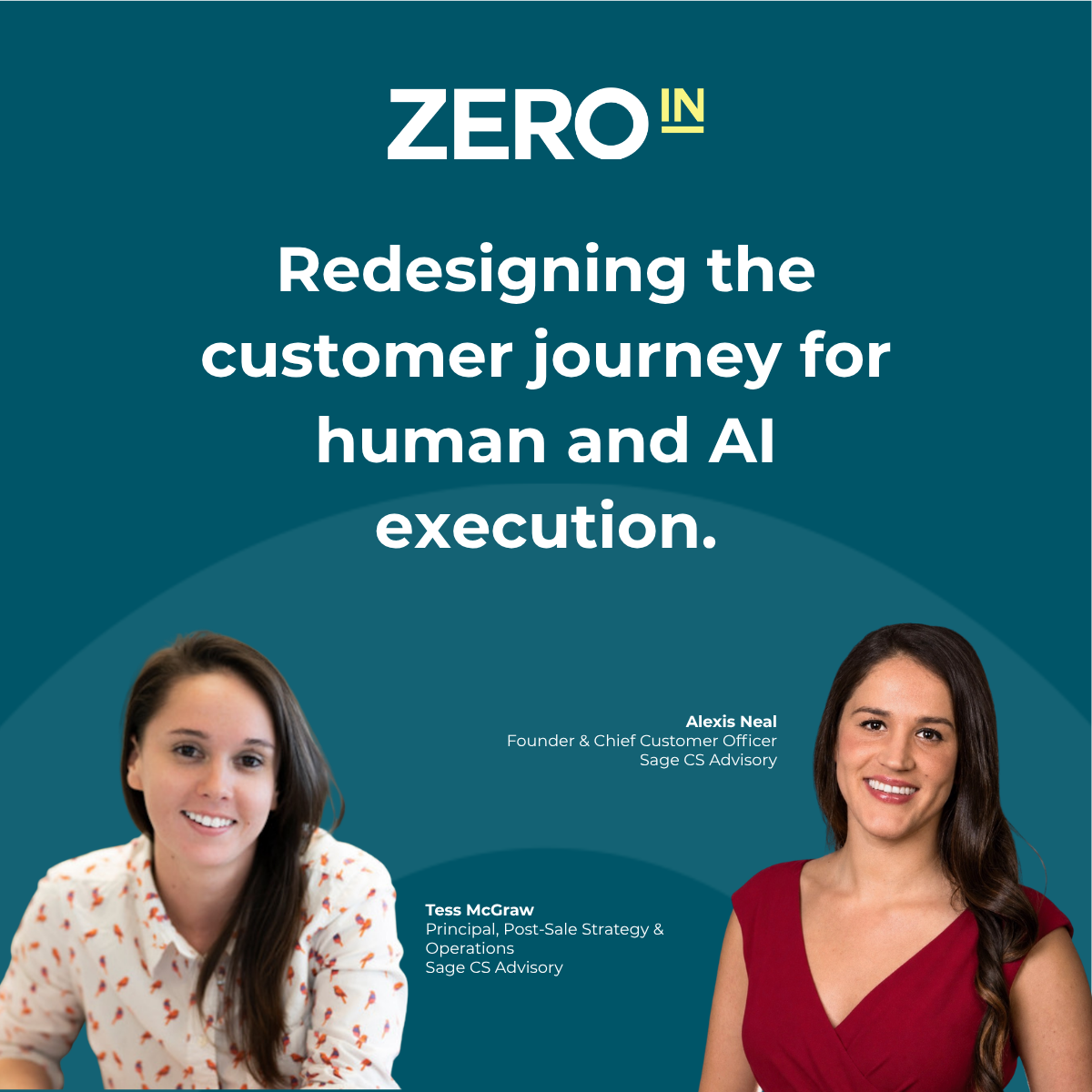
ZERO-IN | Churn Zero
November 5-6, 2026
Nashville, TN
Sage will be in the Expo Hall & Facilitating a Workshop session: Your People. AI Enabled. Redesigning the Customer Journey For Human + AI Execution.
We'd love to see you there - Get More Info here.
All Resources
Big Ideas. ACTUAL EXPERIENCE.
Real Impact.
Access Sage’s resources, infographics, and whitepapers referenced in our articles, for free.
Follow us on LinkedIn to stay up to date on the latest thinking in post-sale strategy and Customer Success.